A service dog candidate may begin training with promise and still not become a working service dog. This can happen during puppyhood, adolescence, formal training, or public-access preparation.
When this happens, many people use the term service dog washout. At Pawsitively, we also use career change. We consider career change the kinder and more accurate term because the dog is not being judged as a failure. The dog is being guided away from work that may not be safe, comfortable, or appropriate.
A washout does not mean your dog failed. It does not mean you failed as a handler. It means that the information available to us has changed, and we have a responsibility to respond honestly.
Why Career-Changing a Service Dog Candidate Is Sometimes the Right Decision
Service dog work is demanding. A working dog must be able to move through public environments safely, remain reasonably neutral around people and animals, recover from ordinary stress, settle for extended periods, and perform trained tasks reliably.
Not every good dog is suited to those demands. A dog can be loving, intelligent, trainable, and deeply important to your life without being able to work as a service dog.
A responsible programme must consider the whole dog:
- Emotional stability.
- Physical health.
- Recovery from stress.
- Public behaviour.
- Ability to settle.
- Motivation for the work.
- Long-term welfare.
- The handler’s need for safe, reliable assistance.
When those factors no longer support service work, career change may be the right decision.

Why a Candidate May Be Career-Changed
A career-change decision is individualized. We do not make it because of one imperfect outing or one missed behaviour. We look for patterns, context, progress, and welfare.
Fear or environmental sensitivity
Some dogs remain uncomfortable around traffic, crowds, unusual surfaces, loud sounds, tight spaces, elevators, or unfamiliar buildings. Confidence can develop with thoughtful support, but a dog should not have to endure sustained fear to meet a training goal.
The question is not whether a dog can be forced through an environment. The question is whether the dog can participate comfortably and recover well.
Reactivity
A dog may respond strongly to other dogs, people, mobility equipment, noises, or movement. Reactivity can have many causes, and it deserves careful assessment rather than blame.
If a dog cannot maintain safe, manageable behaviour in the environments required for service work, continuing may not be appropriate. Public safety and the dog’s welfare both matter.
Difficulty recovering from stress
Every dog encounters stress. Service dogs need the ability to return to a comfortable state after ordinary challenges.
A candidate may be career-changed if they remain distressed for too long, need extensive recovery after routine outings, or show repeated signs that public work is taking more from them than they can comfortably manage.
Excessive or sustained public stress
Some dogs cope in one environment but become overwhelmed when outings are longer, busier, or less predictable. Stress may appear as avoidance, freezing, panting, scanning, inability to eat, repeated displacement behaviours, or difficulty engaging with the handler.
A dog does not need to be visibly dramatic for their welfare to be affected. Sustained stress is important information.
Health or orthopaedic concerns
A service dog’s work can involve walking, standing, settling on different surfaces, navigating public spaces, and performing specific trained tasks. Health or orthopaedic concerns may make that work uncomfortable or unsafe.
A veterinary concern does not necessarily mean a dog is seriously ill. It may mean that the physical demands of service work are not a fair match for that individual dog.
Inability to settle or maintain neutrality
A service dog must be able to disengage from ordinary distractions. They need to settle under a table, wait in a public space, ignore food and movement, and remain available to the handler without constantly seeking interaction.
Some dogs are naturally social, highly active, watchful, or easily stimulated. Those traits may be perfectly manageable in a pet home but incompatible with the sustained neutrality required for service work.
Changes as the dog matures
Adolescence can change a dog considerably. The puppy who was assessed may not be the same dog who emerges through adolescence.
New sensitivities, reactivity, independence, environmental concerns, or changes in motivation may become clearer with maturity. This is one reason an early assessment cannot predict a dog’s entire future.
We assess candidates before acceptance so that potential concerns can be identified as early as possible, rather than after years of investment. We also continue to evaluate dogs throughout training because development remains ongoing.
The dog does not enjoy the work
This is a legitimate reason on its own.
A dog may perform behaviours competently but show little comfort or enthusiasm for the overall work. They may prefer a less structured life, more freedom to explore, or activities with different demands.
A dog’s enjoyment is not a minor consideration. Service work is a long-term lifestyle. We should not keep asking a dog to do work they consistently find difficult or unrewarding simply because they can complete some parts of it.
Why an Initial Assessment Cannot Guarantee the Outcome
A Potential Service Dog Assessment describes the dog at the time of assessment. It does not guarantee acceptance, successful completion of training, certification, or future service dog status.
Health can change. Behaviour can change. Stress responses can change. Adolescence can reveal information that was not available when the dog was younger. Training can also show us how a dog responds to increasing demands and more complex environments.
That uncertainty is not a weakness in the assessment process. It is a reality of working with living animals.
Our Potential Service Dog Assessment is $150 plus applicable tax. The purpose is to begin with more information, not to promise a particular result. Acceptance into our 12-month Owner-Trainer Program also does not guarantee that a dog will ultimately become a service dog.
Our responsibility continues after the first assessment. We monitor progress and consider whether the work remains safe, humane, and appropriate.
Why Continuing Is Not Always the Kindest Choice
It is understandable to want to continue. You may have spent months preparing. You may have paid for equipment, assessments, training, veterinary care, and travel. You may have built your hopes around this particular dog. If you want a clearer picture of how much a service dog costs in Canada, it can help to review the full financial picture before deciding what comes next.
Those investments are real. So is the need for a service dog.
However, money and time already spent cannot make a dog suitable for work that no longer fits. Continuing to push because of those investments is not fair to the dog. It may also fail to produce the safe, reliable assistance you need.
This is not a criticism of your commitment. It is a boundary that protects both members of the team.
An ethical programme must be willing to say when continuing is no longer appropriate. That is a strength of a training approach, not a failure of it. Honest guidance prevents a difficult situation from becoming more stressful, more expensive, or less safe.
What Happens Next?
There is no single path after a career-change decision. The next step depends on the dog, your household, your goals, and the reason for the decision.
Transition to life as a companion dog
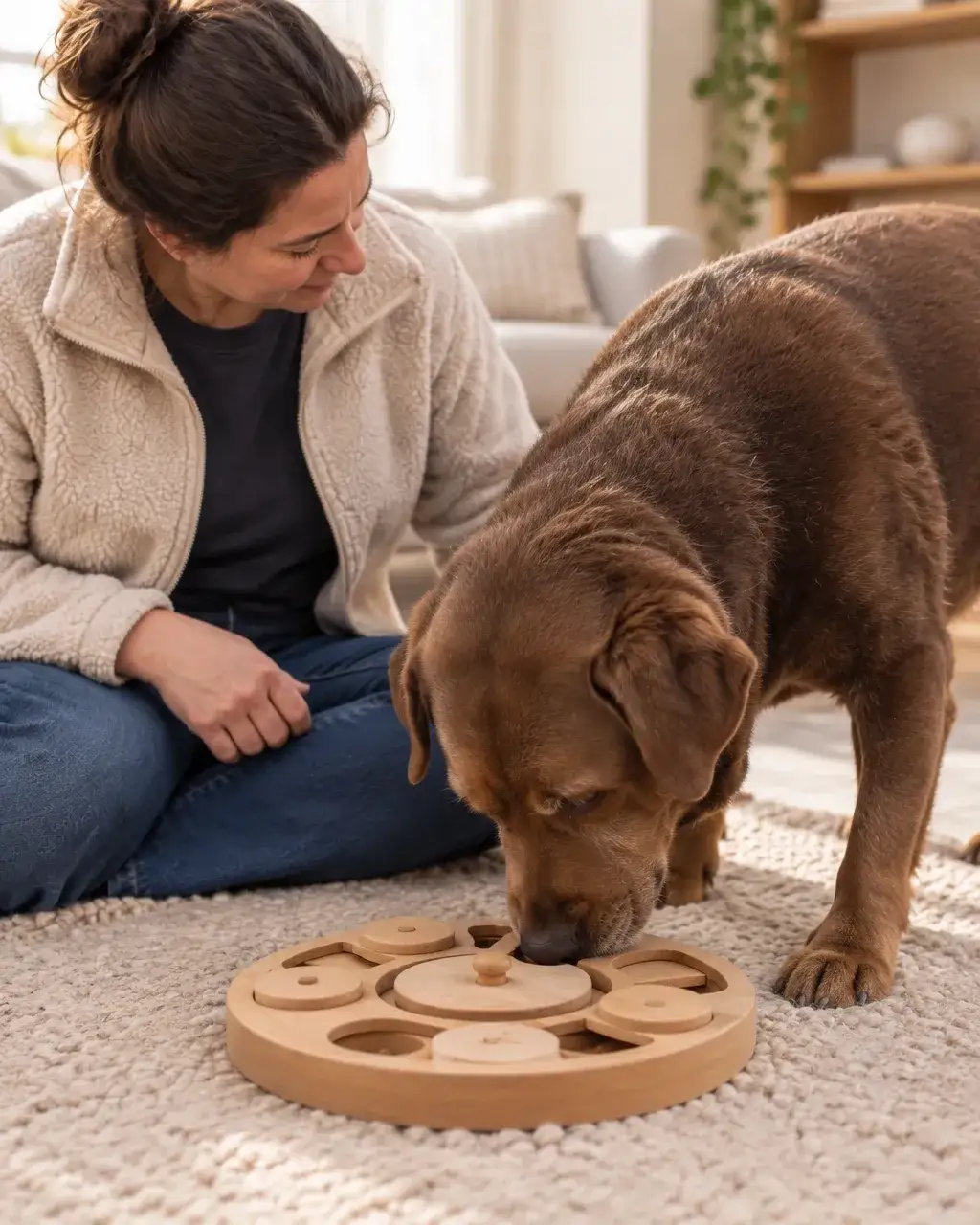
Many career-changed candidates become valued family pets. They may need time to adjust from structured training to a less demanding routine.
A transition plan may include:
- Removing service dog equipment and expectations.
- Returning to ordinary pet-dog routines.
- Choosing environments where the dog can relax.
- Maintaining useful manners without requiring public-access work.
- Providing appropriate enrichment and rest.
- Managing any known sensitivities or health needs.
- Sharing relevant information with future caregivers if rehoming is necessary.
A dog who does not become a service dog can still have a meaningful, secure, and fulfilling life.
Consider a different working activity
Some dogs may enjoy activities with different expectations. Depending on the dog’s health, behaviour, and interests, this could include scent work, rally, obedience, recreational sport, hiking, structured enrichment, or another suitable activity.
This is not about finding a replacement career at all costs. It is about noticing what the dog can enjoy and do comfortably.
Decide whether to pursue another candidate
You may choose to continue toward service dog work with another dog. That decision deserves practical planning.
Consider:
- The time required for another assessment and training process.
- The cost of acquiring or supporting another candidate.
- Whether your daily life can accommodate another transition.
- What you learned from the first candidate.
- Which tasks and public-access requirements are essential for you.
- What support you will need from trainers, family, or other professionals.
Our 12-month Owner-Trainer Program is $9,999.99 plus applicable tax. It includes 104 hours of individualized training. A $1,000 non-refundable deposit is applied toward the programme cost. These financial commitments should be considered carefully before beginning or continuing.
You can review our service dog programmes, Owner-Trainer curriculum, and information about training your own service dog in Canada before deciding on your next step.
The Emotional Reality of a Washout
Grief is common after a service dog candidate is career-changed. You may be grieving the future you imagined, not just changing a training plan.
You may feel:
- Sadness.
- Guilt.
- Anger.
- Relief followed by guilt.
- Disappointment.
- Fear about starting again.
- Concern that you made the wrong choice.
- Uncertainty about how to describe what happened to other people.
These feelings do not mean you are being unreasonable. They reflect the importance of the work and the bond you have built with your dog.
Please do not turn the decision into a judgement about your worth as a handler. You cared enough to consider your dog’s welfare and your own safety honestly. That is responsible handling.
A career change can be painful and still be the right decision.
The Door Can Remain Open
Your dog’s career change does not erase the training, relationship, or progress you shared. It gives you clearer information about what this particular dog needs.
Your dog can remain a valued companion. You can continue building skills together in ways that support confidence, comfort, and trust.
You may also pursue service dog work in the future with another candidate. If you are unsure what comes next, you can contact us to discuss your situation and the available options.
We will approach that conversation with care, clear boundaries, and honest guidance.
About the author
Melanie Burneau
Owner & Head Trainer
Pawsitively Service Dogs Inc.
Nova Scotia: melanie@pawsitivelyservicedogs.ca
British Columbia: jenn@pawsitivelyservicedogs.ca
General inquiries: info@pawsitivelyservicedogs.ca