Understanding the Real Cost of Training and Maintaining a Service Dog
There is no single Canadian price for a service dog.
The total cost depends on several factors:
- Whether you owner-train with professional support or receive a fully trained dog.
- Whether you already have a suitable dog.
- Which province you live in.
- How much individualized training and guidance your team needs.
- How long the dog takes to develop reliable skills.
- Whether the dog remains suitable for service work throughout the process.
- How much veterinary care, equipment, travel, and handler time are required.
A service dog is not a one-time purchase. It is a long-term working partnership that requires planning, training, maintenance, and ongoing attention to safety and welfare.
We want you to have clear information before you commit. Understanding the costs early can help you decide whether this path is appropriate for your needs and your budget.
The Financial Risk Comes First
The most important financial fact is this:
A potential service dog may need to be career-changed, and the money spent may not be recovered.
A dog can make meaningful progress and still prove unsuitable for service work. The dog may develop stress in public settings, struggle with necessary tasks, show health concerns, or lack the stability required for reliable public access.
This is why assessment comes before a major training investment.
Our Potential Service Dog Assessment costs $150 plus tax. This is deliberately the smallest first step. It gives you professional information about the dog’s current suitability, likely training needs, and important risks before you commit to a longer and more expensive programme.
An assessment cannot guarantee a working outcome. It can, however, help you make a more informed decision at the earliest practical stage.
A cheaper dog is not necessarily a saving. If the dog is not suited to the work, the cost of acquiring and training that dog may become money you cannot recover.
Pawsitively’s Current Service Dog Costs
Our pricing is stated plainly so you can compare it with your own resources and priorities.
Potential Service Dog Assessment
$150 plus tax
This assessment helps evaluate whether a puppy or adult dog may have the temperament, health considerations, and learning profile needed for service work.
The assessment is not a certification test. It is an early suitability review.
One-Year Owner-Trainer Program
$9,999.99 plus tax
This programme includes:
- 104 hours of individualized training and guidance.
- Structured support over 12 months.
- A tailored training plan for the handler and dog.
- Development of foundational skills, task work, and public access skills.
- Progress monitoring throughout the programme.
The programme begins with a $1,000 non-refundable deposit, which is applied to the total programme cost.
Owner-training requires substantial handler participation. You are not simply purchasing lessons. You are developing the knowledge, timing, judgement, and practical skills needed to work safely and consistently with your dog.
You can review the general structure of our service dog programmes and owner-trainer curriculum before contacting us with questions.
CASDT Final Exam
The current CASDT final exam fee is $399.99 plus tax.
This is a professional industry testing fee. It is separate from provincial government certification and does not replace any provincial assessment that may apply.
The province certifies teams; trainers prepare them.
A trainer or training organization can help you prepare for a test. A trainer cannot guarantee that a dog will pass, and a private industry test should not be described as government certification.
Provincial Assessment and Certification Costs
Provincial rules and fees are different. Certification is also not the same thing as training.
In British Columbia, Alberta, and Nova Scotia, service dog certification is voluntary. Handlers are not required to register their dogs simply to train or work with them. However, certification may provide important documentation for particular access situations, and provincial requirements should be reviewed carefully.
Nova Scotia
Nova Scotia’s provincial public safety assessment currently costs $187.50. The fee is payable to the assessing body.
There is currently no application fee for the provincial certification itself. An income-support waiver may be available for the assessment fee, depending on your circumstances and the requirements of the provincial programme.
Fees and procedures can change. Confirm the current amount directly with Nova Scotia’s Service Dog Program before budgeting for an assessment.
If you are training in Nova Scotia, our service dog training in Nova Scotia page provides information about working with a local training team.
British Columbia
In British Columbia, the public safety assessment currently costs $200 where that assessment is required.
Provincial certification itself is currently free of charge.
As in Nova Scotia, certification is voluntary. A handler may train and work with a service dog without registering the dog, but particular access, housing, transportation, or documentation situations may involve different legal considerations.
Confirm current requirements and fees with the Province of British Columbia before making plans. For handlers in the region, our service dog training in Victoria and the West Shore page explains how we provide training support.
Federal and Provincial Responsibilities
Service dog access is affected by both federal and provincial law, but not every situation falls under the same jurisdiction.
Provincial governments generally oversee matters such as provincial certification systems, public safety assessments, and many housing or public-access questions. Federal rules may apply to federally regulated transportation, workplaces, banking, telecommunications, and other federally regulated services.
The Accessible Canada Act, transportation regulations, and the Canadian Human Rights Act form part of the federal legal context. They do not create one universal certification system for every service dog team in Canada.
This is one reason broad statements such as “all service dogs must be registered” or “one certificate works everywhere” are unreliable. The relevant province, service provider, and jurisdiction matter.
Costs People Often Miss
The programme fee is only one part of the financial picture.
Acquiring a Suitable Dog
You may need to purchase or adopt a dog before training begins. The acquisition cost can vary considerably.
However, selecting the lowest-cost dog is not always financially responsible. A dog’s temperament, health, structure, motivation, recovery from stress, and ability to learn all influence suitability.
A dog that is inexpensive to acquire but cannot safely complete the work may cost more in the long term than a carefully selected candidate.
Veterinary Care
Veterinary expenses can include:
- Initial health examinations.
- Vaccinations and preventive care.
- Parasite prevention.
- Dental care.
- Diagnostic testing.
- Treatment for illness or injury.
- Emergency veterinary care.
- Long-term management of health conditions.
Unexpected costs are possible even when you plan carefully. Consider whether pet insurance, a dedicated savings account, or another emergency plan is realistic for your household.
Food, Grooming, and Equipment
A working dog needs appropriate food, routine grooming, and equipment that fits correctly and supports safe handling.
Potential expenses include:
- Food and treats.
- Harnesses, collars, leashes, and long lines.
- Identification equipment.
- Crates, beds, and travel equipment.
- Seasonal clothing or protective gear where appropriate.
- Grooming tools or professional grooming.
- Replacement equipment as the dog grows or equipment wears out.
Equipment is not permanent. Leashes fray, harnesses lose their fit, and working gear may need to be replaced over the dog’s working life.
Travel
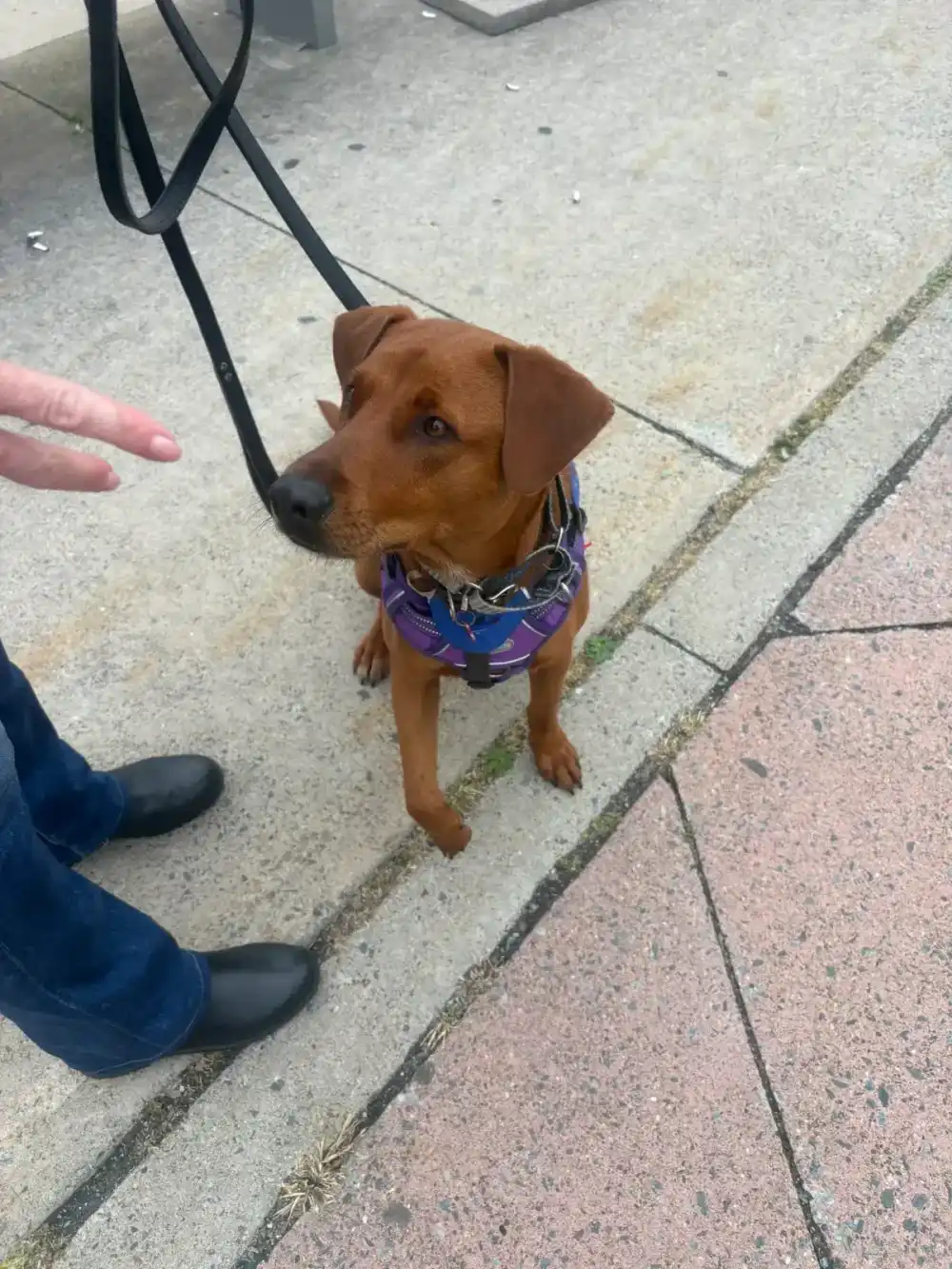
Training and assessment may require travel to appointments, public-access locations, or testing sites.
Budget for:
- Fuel or public transportation.
- Parking.
- Accommodation for longer trips.
- Meals while travelling.
- Travel across provincial boundaries.
- Additional travel if an assessor must attend your community.
For some handlers, travel is also an accessibility cost. The time, energy, and practical planning required to attend sessions can be significant.
Testing, Certification, and Reassessment
Testing and certification fees may not occur at the same point in every province.
You may need to budget for:
- A professional industry exam.
- A provincial public safety assessment.
- Certification-related documentation.
- Reassessment on renewal, where applicable.
- Travel to an assessment.
- Replacement identification documents, if applicable.
The fact that certification is voluntary does not mean that every access question is simple. Review the specific requirements that apply to your situation rather than relying on generic Canadian service dog information.
Time Away From Work
Handler time is a real cost, even when nobody sends you an invoice.
Training may require time away from:
- Paid work.
- School.
- Medical appointments.
- Family responsibilities.
- Other disability supports or care arrangements.
You may need time to attend sessions, practise between appointments, travel to public-access locations, complete homework, and manage the dog’s rest and welfare.
A realistic budget includes both money and time.
Why the Cost Can Look Different Over a Working Life
A figure such as $9,999.99 can look very different when considered over the working life of a service dog rather than as one single payment.
An assistance dog typically works for many years, although the exact working life varies between dogs and cannot be guaranteed. Training costs support the development of a partnership that may provide value over an extended period.
That perspective is worth considering, but it should not be used to minimize the initial financial risk.
You are not buying a certificate. You are funding a partnership that either works reliably over time or does not.
If the dog is unsuitable, the cost remains real. The dog may need to be career-changed, and the training money may not be recoverable. This is why early assessment, careful selection, welfare-focused training, and honest progress reviews matter.
For more information about the training timeline, read How Long Does It Take to Train a Service Dog?.
The Cheapest Path Is Not Always the Cheapest
A low-cost dog that washes out can cost more than a carefully assessed candidate.
Low-cost training that does not produce reliable public access can also cost more when you later need to rebuild skills, address gaps, or start again with a different professional.
This does not mean that every handler needs the most expensive programme. It means that cost should be considered alongside:
- Suitability.
- Safety.
- Evidence-informed methods.
- Trainer experience.
- Individualized support.
- Progress monitoring.
- The dog’s welfare.
- The reliability required for your daily life.
Our goal is not to pressure you into a programme. It is to help you understand the commitment before you make it.
The $150 Potential Service Dog Assessment is intentionally the smallest first step. It can help you find out early whether the expensive path is even the right one.
If you are still exploring whether owner-training may suit your circumstances, read Can You Train Your Own Service Dog in Canada? and Can My Dog Become a Service Dog?.
A Practical Budget Checklist
Before beginning, consider whether you can plan for:
- A potential service dog assessment.
- The cost of acquiring a suitable dog.
- Professional training and guidance.
- Provincial or professional testing.
- Veterinary care and emergencies.
- Food and grooming.
- Equipment and replacement equipment.
- Travel and accommodation.
- Time away from work or school.
- Career-change risk.
- Ongoing care after training is complete.
You do not need to have every answer immediately. You do need enough information to make a responsible first decision.
If you would like to discuss your situation, you can contact us. We can help you review the available options, identify the next appropriate step, and keep the process focused on safety, welfare, and long-term progress.
Melanie Burneau
Owner & Head Trainer
Pawsitively Service Dogs Inc.
Nova Scotia: melanie@pawsitivelyservicedogs.ca
British Columbia: jenn@pawsitivelyservicedogs.ca
General inquiries: info@pawsitivelyservicedogs.ca