Understanding Owner-Trained Service Dogs, Provincial Certification and What Training Really Involves
One of the questions we hear most often is:
“Can I train my own service dog in Canada?”
The short answer is yes, owner-training is possible in Canada, but the rules governing service dogs are not the same across the country.
Canada does not have one national service-dog registry, certification card or universal provincial standard. Requirements for public access, documentation and government certification vary depending on where you live.
That distinction is important.
Buying an identification card, certificate, registration number or vest online does not make a pet a trained service dog.
A legitimate service dog is the result of appropriate temperament, extensive training, disability-related work or tasks, reliable behaviour and the ability to work safely in public.
For some people, owner-training can provide a realistic path to developing that partnership.
But owner-training does not mean doing it without professional guidance, standards or accountability.
What Is an Owner-Trained Service Dog?
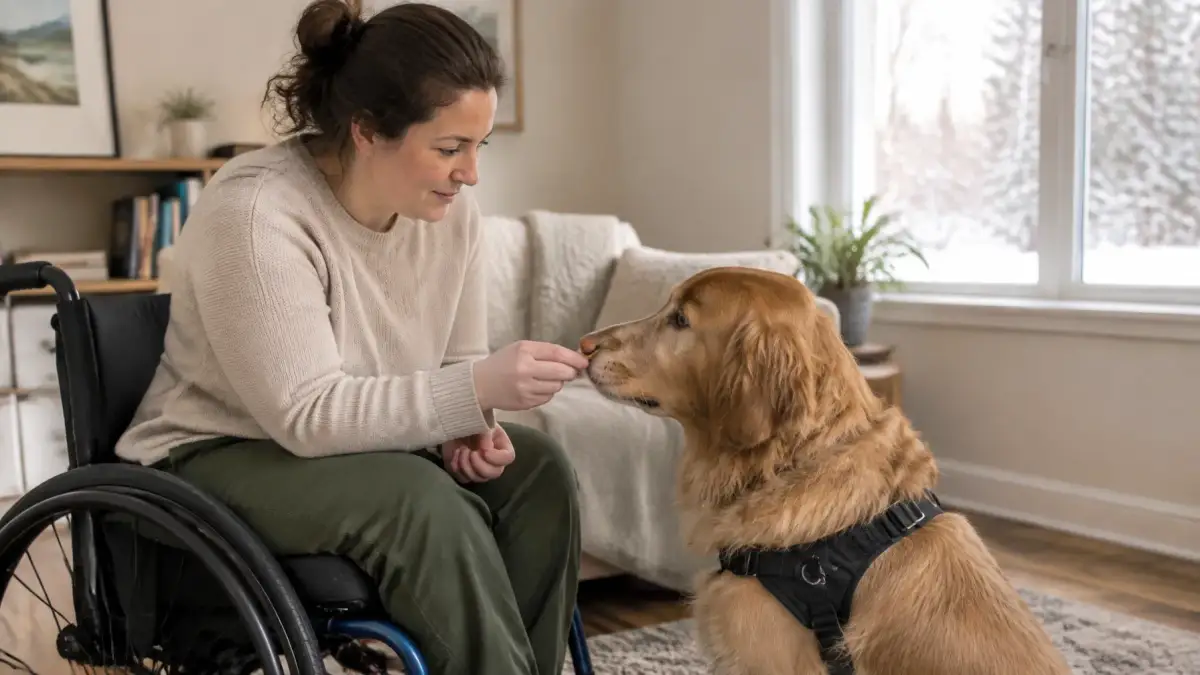
An owner-trained service dog is a dog whose handler participates directly in the dog’s training rather than receiving a fully trained dog from a traditional service-dog organisation.
That training may be completed independently or with substantial assistance from a professional trainer.
At Pawsitively Service Dogs, our Owner-Trainer Program is built around the second model.
The handler is an active participant in the training process while receiving structured professional instruction and guidance.
This allows training to be individualised to the handler’s disability-related needs while also teaching the handler how to understand, maintain and continue their dog’s training.
There Is No Canadian Service Dog Registry
This is one of the most important things prospective handlers should understand.
There is no single federal registry that makes a dog a service dog throughout Canada.
Provincial laws and human-rights protections determine many of the rules surrounding service animals and public access.
That is why websites claiming to “register your service dog in Canada” should be approached very carefully.
An online company can sell a card.
It can sell a certificate.
It can sell a vest.
It cannot create legal status simply by entering your dog’s name into its private database.
Some provinces do have legitimate government service-dog certification or qualification systems. Those programs are very different from private online registries.
Which Canadian Provinces Have Service Dog Certification?
Nova Scotia, British Columbia and Alberta have provincial systems for certifying or qualifying service-dog teams, but the three systems do not operate identically.
This is an important distinction.
In Nova Scotia and British Columbia, provincial certification is voluntary.
A person with a disability who relies on a legitimate service dog may still have protections under applicable human-rights legislation even when the team has not obtained provincial certification.
Certification can, however, provide the specific protections and identification associated with the applicable provincial service-dog legislation.
Alberta operates differently for owner-trained and privately trained dogs.
Owner-trained and privately trained dogs generally need to successfully complete Alberta’s Service Dog Qualification Assessment to become qualified under the province’s Service Dogs Act and receive the statutory public-access rights associated with that qualification.
So although these three provinces all have government service-dog systems, it is not accurate to assume that “certification” means exactly the same thing in all three.
Can You Train Your Own Service Dog in Nova Scotia?
Yes.
Nova Scotia provides a pathway for privately trained service-dog teams.
Importantly, provincial service-dog certification in Nova Scotia is voluntary.
A person with a disability who relies on a service dog may still have disability-related protections under human-rights legislation without obtaining provincial certification.
For handlers who choose provincial certification, however, certification provides the public-access and tenancy protections established under Nova Scotia’s Service Dogs Act.
Privately trained teams can apply for certification and complete the provincial service-dog assessment.
The application process currently requires documentation including confirmation from a physician or nurse practitioner that the person requires a service dog, veterinary documentation and other application materials.
The privately trained dog and handler must also successfully complete the provincial assessment.
Nova Scotia’s assessment consists of 40 exercises designed to evaluate whether the dog is calm, stable and reliable, whether the handler maintains control, and whether the dog demonstrates appropriate and safe behaviour in public.
Certification is therefore an optional provincial pathway, not something that transforms an untrained dog into a service dog.
The training has to come first.
Can You Train Your Own Service Dog in British Columbia?
Yes.
British Columbia also provides a pathway for self-trained service-dog teams and teams trained through schools that are not recognised through the province’s accredited-school pathway.
Like Nova Scotia, British Columbia’s provincial certification program is voluntary.
Certification under BC’s Guide Dog and Service Dog Act provides teams with the identification and protections associated with that legislation.
However, not having provincial certification does not automatically mean a person has no disability-related protections. Human-rights obligations may still apply depending on the circumstances.
Self-trained teams that choose to pursue provincial certification must meet the province’s application requirements and successfully complete the applicable public-safety assessment.
The assessment evaluates whether the team can function safely and appropriately in public and examines areas such as handler control, stability, reliability and public behaviour.
There is also an important distinction for people who are still training their own dogs in British Columbia.
A dog that is being trained for future service work should not automatically be treated as though it already has all the rights of a fully trained service dog.
Handlers should understand the rules that apply during training rather than assuming that putting a vest on a service-dog candidate creates public-access rights.
What About Alberta?
Alberta also recognises owner-trained and privately trained service dogs, but its provincial system operates differently.
Owner-trained, privately trained and certain other dogs must successfully complete Alberta’s Service Dog Qualification Assessment to become qualified under Alberta’s Service Dogs Act and obtain the public-access rights associated with that qualification.
The assessment contains 40 exercises evaluating the team’s behaviour, handler control and ability to work safely in public.
Alberta also requires the dog to demonstrate disability-related skills or tasks.
Current Alberta standards require owner-trained dogs to demonstrate a minimum of three tasks or skills that assist with the handler’s disability.
This is an important difference from Nova Scotia and British Columbia’s voluntary certification frameworks.
Alberta also distinguishes between fully qualified service dogs and dogs that are still in training.
An owner-trained dog that is not being trained under the supervision of a qualified organisation does not automatically have the same statutory public-access rights as a fully qualified service dog.
Ontario Uses a Different System
Ontario is a good example of why Canadians should be cautious about blanket statements regarding service-dog “certification.”
Ontario does not require service animals to have a certificate or identification card under its provincial accessibility and human-rights framework.
When it is not readily apparent that an animal is a service animal, documentation from an eligible regulated health professional may be used to confirm that the animal is required because of a disability.
That is very different from the government certification systems available in Nova Scotia and British Columbia or Alberta’s qualification framework.
An Ontario handler therefore should not be told that they need to purchase a “Canadian service dog ID.”
They don’t.
What About the Rest of Canada?
Other provinces and territories have their own legislation, human-rights frameworks and requirements.
That means advice from another province may not apply where you live.
It also means American information is frequently misleading in Canadian service-dog discussions.
For example, references to the Americans with Disabilities Act (ADA) describe American federal law.
The ADA is not Canadian law.
Likewise, quoting Ontario requirements to a handler living in Nova Scotia, British Columbia or another province can create confusion because provincial frameworks differ.
Handlers should always check the current legislation and official government guidance applicable to the province or territory where they live or travel.
What Does a Service Dog Actually Need to Learn?
Training a service dog involves much more than obedience.
A dog may know sit, down, stay, heel and recall beautifully and still not be suitable for service work.
Service dogs need to be able to function safely and reliably in complex human environments.
Training commonly includes:
Foundational Skills
The dog needs reliable communication and foundational behaviours before more demanding work can reasonably be expected.
Public-Access Skills
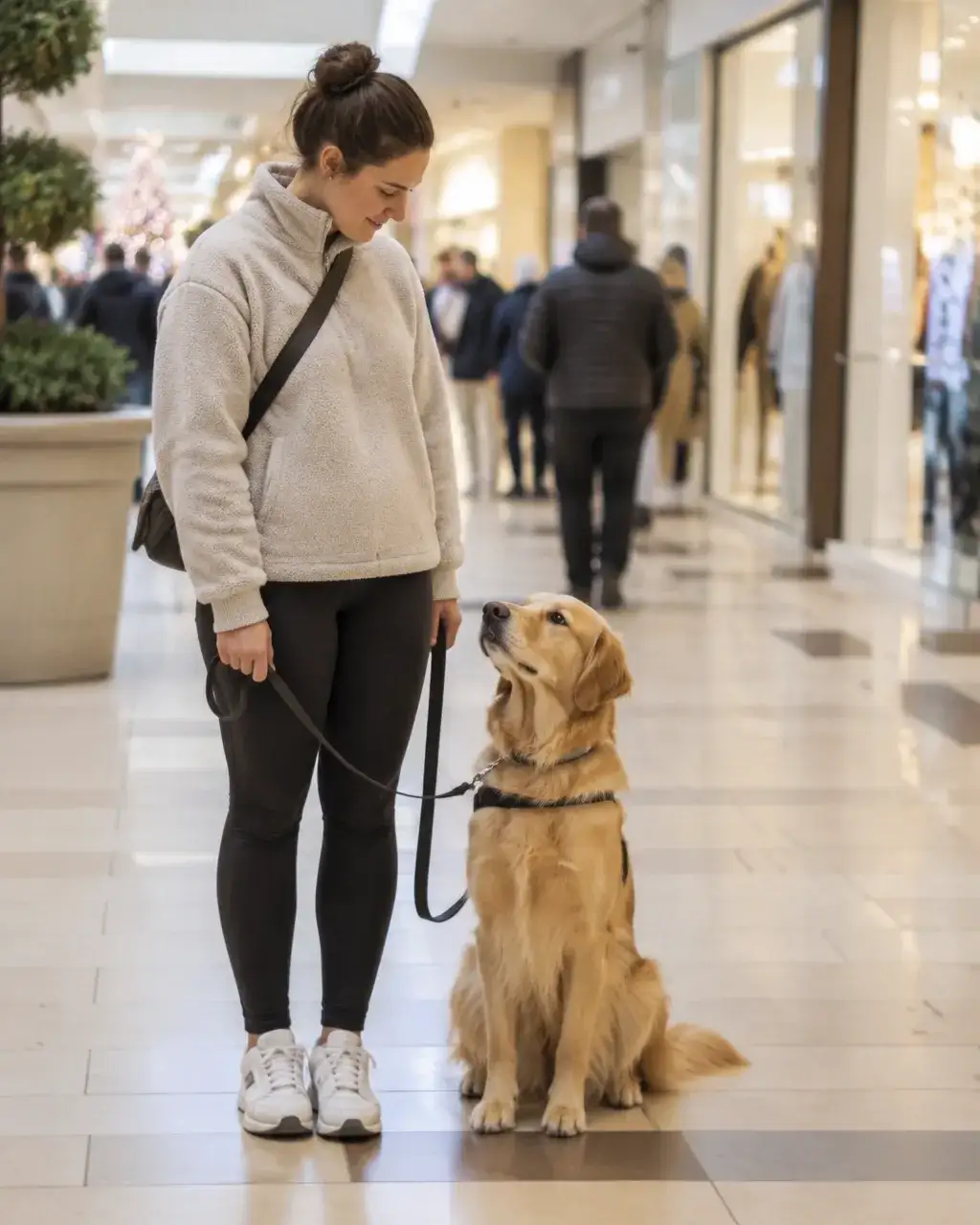
Service dogs may encounter restaurants, stores, medical facilities, public transportation, crowds, elevators, automatic doors, shopping carts, food, children, other animals, unusual flooring and countless unexpected distractions.
The goal is not simply obedience.
The dog must be able to remain safe, manageable and emotionally comfortable while working in those environments.
Environmental Confidence
Service work requires resilience.
Dogs need to recover appropriately from unexpected events and navigate new environments without becoming overwhelmed.
Neutrality
A working service dog cannot greet every person or dog it sees.
The dog needs to learn that most environmental distractions are simply background information.
Disability-Mitigation Tasks
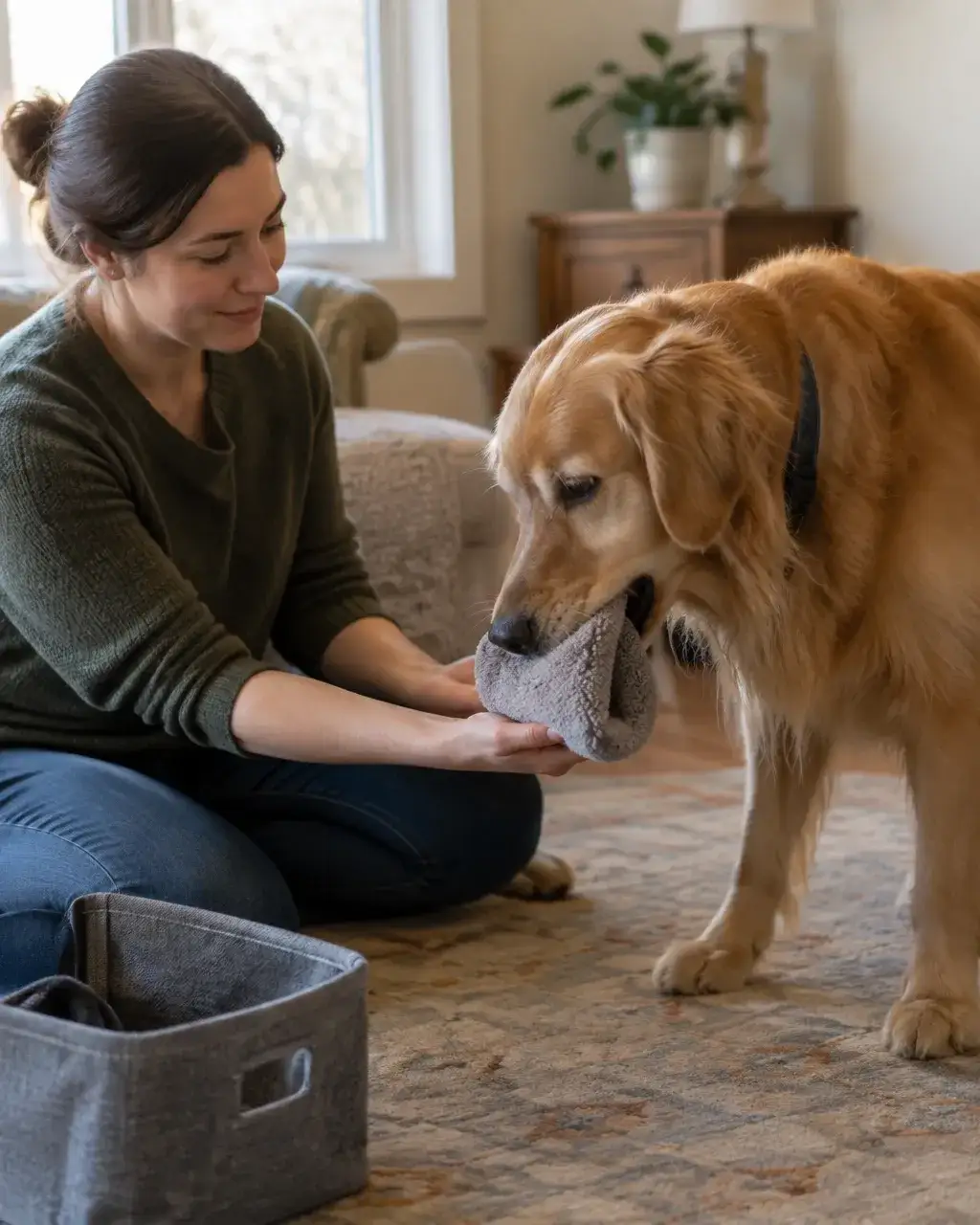
A service dog’s trained work should relate to the individual handler’s disability-related needs.
Tasks vary enormously between teams.
Depending on the handler, trained behaviours may involve retrieving items, responding to specific medical or behavioural changes, interrupting behaviours, providing trained responses during particular disability-related events, assisting with mobility-related activities, locating people or exits, or performing other individualised work.
There is no universal list of tasks that every service dog should know.
Task training should be based on what the individual handler actually requires.
Not Every Dog Is Suitable for Service Work
This can be one of the hardest parts of owner-training.
Loving your dog does not automatically mean your dog will enjoy or succeed at service work.
Service work can place significant demands on a dog. A potential candidate should be evaluated for characteristics such as:
- temperament;
- environmental confidence;
- recovery after stress or surprise;
- sociability and neutrality;
- ability to focus;
- ability to settle;
- response to people and other animals;
- physical health;
- behavioural history; and
- overall comfort with the environments in which the dog may eventually work.
Breed alone cannot determine whether a dog will succeed.
Neither can a puppy temperament test guarantee the adult dog that puppy will become.
Assessment helps us make an informed decision based on the dog in front of us, but no ethical trainer should promise that a young dog will definitely graduate as a service dog.
What Happens if the Dog Isn’t Suitable?
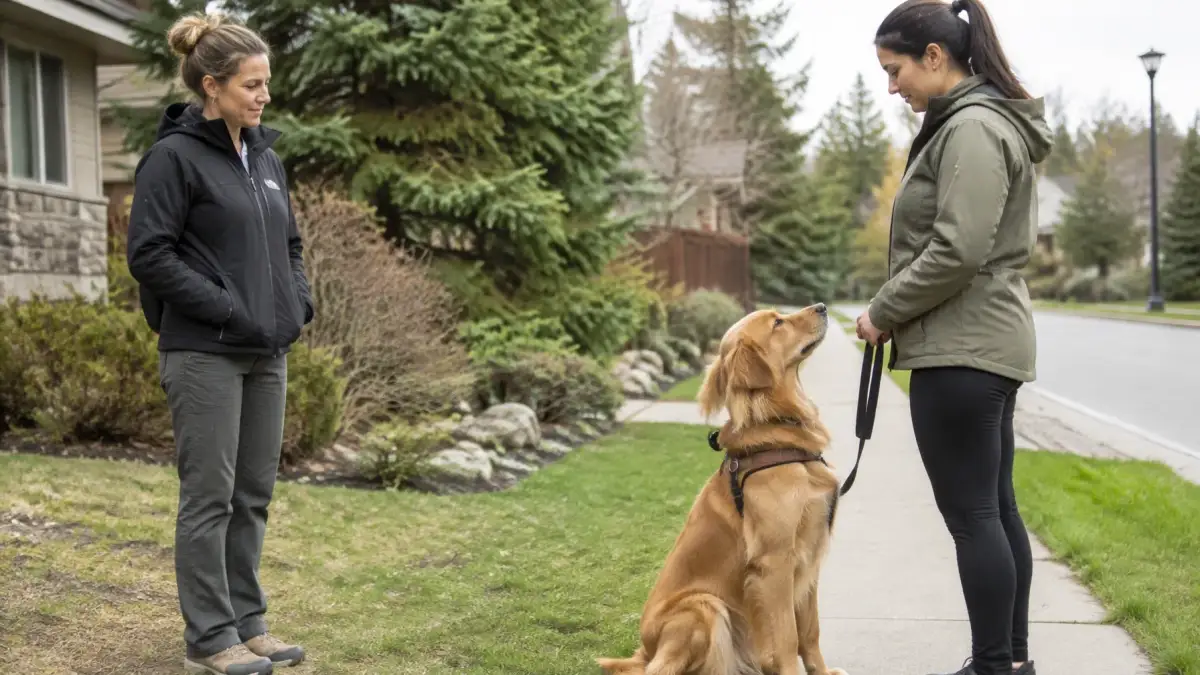
Sometimes a dog begins training and later demonstrates that service work isn’t appropriate for them.
This is often referred to as a washout or career change.
It should not be viewed as a failure.
The welfare of the dog matters.
Trying to force an anxious, fearful, reactive, medically unsuitable or chronically stressed dog to continue working because significant time or money has already been invested is not fair to the dog and may not provide safe, reliable assistance to the handler.
An ethical training program must be willing to say when continuing toward public-access service work is no longer appropriate.
Owner-Training Doesn’t Mean Training Alone
There is an important difference between owner-trained and unsupported.
Professional guidance can help handlers:
- understand canine behaviour;
- identify problems early;
- develop appropriate training plans;
- build public-access skills gradually;
- train individualised disability-mitigating tasks;
- understand reinforcement and learning;
- recognise stress and welfare concerns;
- prepare for applicable provincial standards; and
- learn how to maintain the dog’s skills throughout its working life.
The handler also needs those skills.
A service dog is not a finished product that simply performs forever after training ends.
It is a working partnership that requires ongoing reinforcement, practice, maintenance and advocacy.
How Long Does Owner-Training Take?
There is no responsible answer that promises a service dog can be trained in a few weeks.
Service-dog development takes time because the goal is not merely to teach a collection of behaviours.
The dog needs maturity, experience, generalisation and reliability.
A behaviour demonstrated successfully in a quiet training room is not automatically reliable in a busy shopping centre, restaurant, hospital or airport.
Training needs to progress gradually and appropriately for the individual dog.
Trying to rush that process can create problems rather than prevent them.
Do You Need a Doctor’s Letter for a Service Dog in Canada?
There isn’t one answer that applies everywhere in Canada.
Medical documentation requirements depend on the jurisdiction and circumstances.
For example, Nova Scotia’s certification process for privately trained teams currently requires a medical form completed by a physician or nurse practitioner confirming the need for a service dog.
Other provinces have their own documentation requirements.
Ontario, for example, may require documentation from an eligible regulated health professional when the animal’s role as a service animal is not readily apparent.
This is another reason people should be cautious when a website claims there is one simple national requirement.
Do You Need a Service Dog ID in Canada?
There is no universal Canadian service-dog ID.
Some provinces issue legitimate government identification through their certification or qualification systems.
Nova Scotia, for example, issues identification cards to teams certified under its Service Dogs Act.
British Columbia has its own provincial certification and identification system.
Alberta issues identification to qualified teams under its system.
Ontario, by contrast, states that service animals do not need certificates or identification cards under the Ontario Human Rights Code and AODA framework.
Those government systems are very different from purchasing an unofficial card from a private website.
An ID does not train a dog.
A vest does not train a dog.
A certificate purchased online does not train a dog.
Training, suitability, disability-related need and the applicable law are what matter.
Is Owner-Training Right for You?
Owner-training can be incredibly rewarding, but it is also a significant commitment.
Before beginning, consider:
- Does the dog appear suitable for the work?
- Can you commit to consistent training over an extended period?
- Can you participate actively in the training process?
- Are you prepared for the possibility that the dog may ultimately be unsuitable for service work?
- Do you understand the laws that apply where you live?
- Do you have access to qualified professional guidance when you need it?
If those questions haven’t been explored yet, the best place to begin may not be purchasing equipment or ordering an identification card.
It may be an assessment.
Owner-Trainer Service Dog Training in Nova Scotia and British Columbia
Pawsitively Service Dogs offers an individualised One-Year Owner-Trainer Service Dog Program for eligible dog-and-handler teams.
Our program provides 104 hours of individualised training and guidance over 12 months.
Training includes areas such as:
- foundations and handler education;
- engagement and communication;
- environmental confidence;
- public-access skills;
- neutrality around distractions;
- individualised disability-mitigating task training;
- preparation for applicable provincial standards; and
- maintaining reliable skills as a working team.
Because suitability matters, dogs are assessed before acceptance into the program.
An assessment or participation in training cannot guarantee that a dog will ultimately become a working service dog.
Our responsibility is not simply to help a dog pass exercises.
Our goal is to help develop a safe, confident and reliable partnership while protecting the welfare of both dog and handler.
Pawsitively Service Dogs provides service-dog training in Halifax Regional Municipality, Nova Scotia, and Greater Victoria and West Shore, British Columbia.
To learn more, visit our Service Dog Programs, Owner-Trainer Curriculum, Nova Scotia Service Dog Training, or British Columbia Service Dog Training pages.
Important Note
Service-dog legislation, certification systems and documentation requirements can change. This article provides general educational information and is not legal advice. Handlers should consult current provincial or territorial legislation and official government guidance for requirements that apply to their circumstances.
Last reviewed: October 2026.