
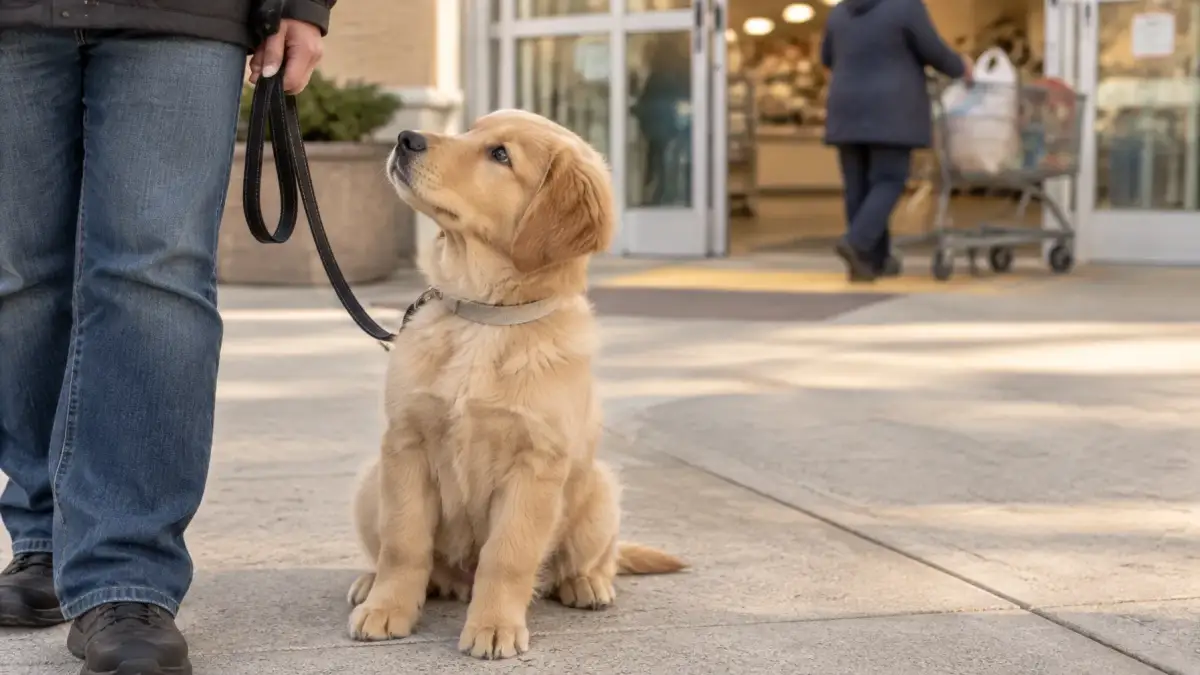
Building Confidence and Neutrality Without Overwhelming Your Puppy
Socializing a future service dog puppy is not about making your puppy extremely social.
It is not about encouraging your puppy to greet every person, play with every dog, or experience every environment as quickly as possible. Quality matters more than quantity. If your puppy is frightened or overwhelmed, simply keeping them in the situation is not good socialization. It can make the experience more difficult.
Thoughtful socialization helps your puppy develop:
- Confidence in unfamiliar situations
- Resilience when the environment changes
- Neutrality around people, dogs, objects, and sounds
- Comfortable engagement with you
- The ability to settle and recover after new experiences
Research on puppy development supports early, controlled and positive exposure, while also emphasizing that individual temperament, environment and ongoing training influence long-term behaviour. Socialization is an important foundation. It is not a guarantee that a puppy will be suitable for service work.
Socialization vs. Greeting
A future service dog needs to learn that seeing another dog does not mean playtime.
They also need to learn that seeing a person does not automatically mean attention, petting or interaction. A puppy who expects to greet everyone may later struggle to remain focused in stores, clinics, offices, restaurants or other working environments.
Neutrality can be reinforced from puppyhood. The useful mental model is:
“I noticed it, and I can continue working with my handler.”
This does not mean your puppy should never play or interact. Appropriate play and friendly relationships are part of a healthy puppy’s life. The goal is to teach your puppy that interaction is one option, not an automatic response to every person or dog.
You can reinforce neutrality by:
- Rewarding your puppy for looking at you after noticing a person
- Offering treats when your puppy calmly observes another dog from a distance
- Practising loose-leash walking past low-level distractions
- Providing short opportunities to sniff and explore
- Ending greetings before your puppy becomes overexcited
- Teaching your puppy to settle beside you after an interaction
A future service dog does not need to be interested in everything. They need to feel safe enough to notice the environment and then return their attention to their handler.
Thoughtful Exposure
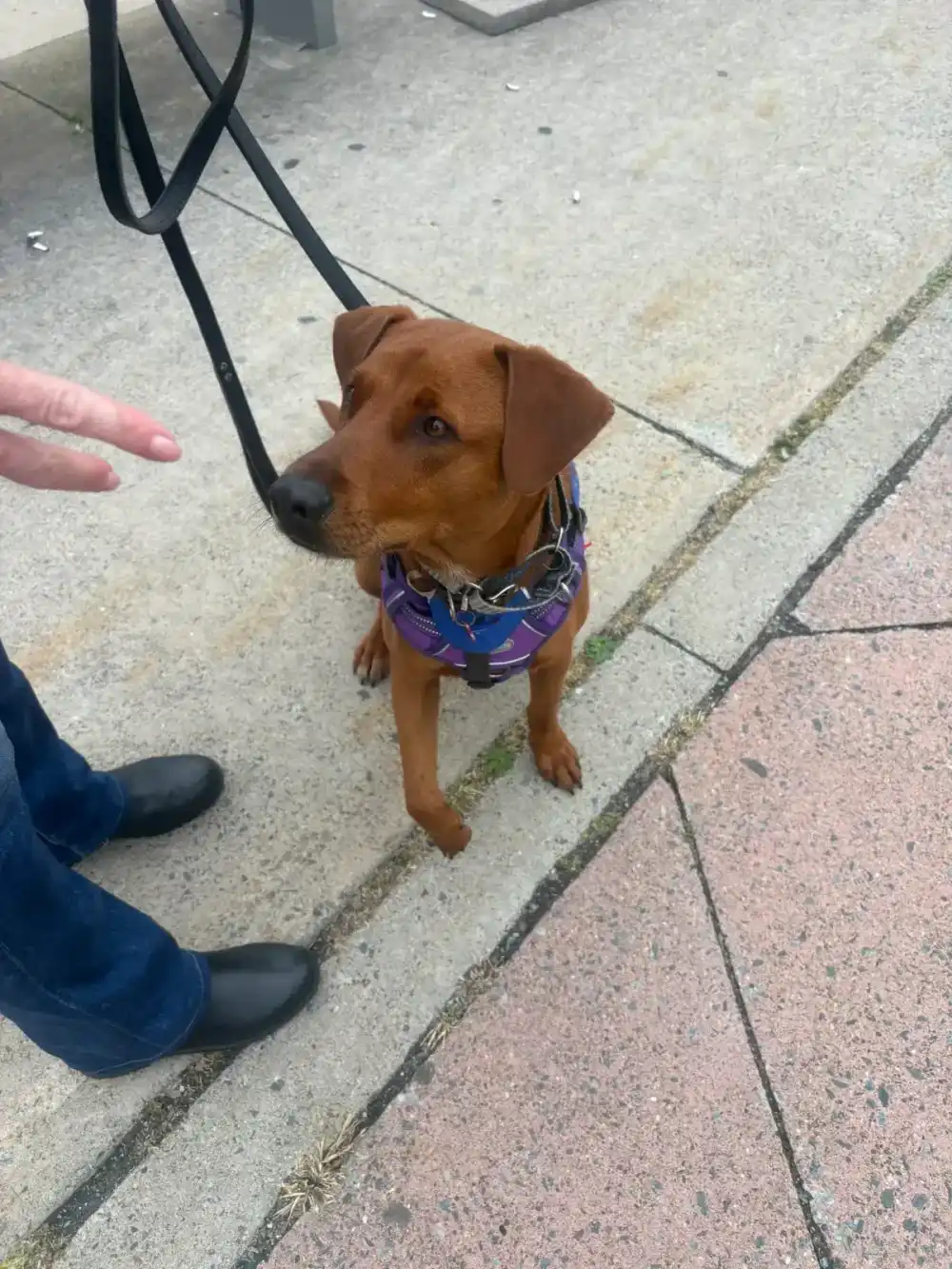
Begin with experiences your puppy can manage. Keep sessions short and adjust the level of difficulty according to your puppy’s body language.
Different people
Introduce your puppy to people with different appearances, voices, clothing and movement patterns. This may include people wearing hats, carrying bags, using mobility aids or moving slowly.
Not every person needs to touch your puppy. Calm observation is valuable. Ask people to ignore your puppy when appropriate, rather than calling them over or reaching toward them.
Dogs at appropriate distances
Choose calm, healthy and well-matched dogs for direct interaction. In other situations, allow your puppy to watch dogs from a comfortable distance.
Reward your puppy for noticing another dog and remaining responsive to you. Distance is a training tool. You can gradually reduce it only when your puppy remains relaxed and able to engage.
Children
Children can move quickly, make unexpected sounds and interact differently from adults. Introduce children carefully and with active adult supervision.
Your puppy should have the option to move away. Children should not be expected to hug, chase, climb over or handle the puppy. A calm interaction may involve simply watching children play from a distance while your puppy receives reinforcement for staying settled.
Mobility aids and wheelchairs
Expose your puppy gradually to wheelchairs, walkers, canes and crutches. Begin with quiet observation. Later, your puppy may watch these items move past, approach them when comfortable and practise walking beside them.
Do not allow your puppy to jump on mobility equipment or investigate it without permission. The goal is calm familiarity, not excitement or fear.
Shopping carts, traffic and vehicles
Shopping carts can make unusual sounds and move unpredictably. Start at a distance in a quiet area. Pair the sight and movement with food, calm praise or a brief engagement exercise.
Traffic exposure should be controlled and safe. Observe vehicles from a secure location rather than placing your puppy close to busy roads. Introduce cars, buses and trucks gradually, paying attention to sound, movement and vibration.
Car travel should also be introduced in small steps. Your puppy may begin by sitting near a parked vehicle, then entering briefly, and later taking short journeys. Follow your veterinarian’s advice if your puppy experiences nausea or significant travel stress.
Elevators and automatic doors
Elevators involve enclosed spaces, changes in flooring and unexpected sounds. Automatic doors may open suddenly, move overhead or make mechanical noises.
Begin during quieter periods. Let your puppy observe before entering. Use a short, comfortable repetition rather than remaining in the area until your puppy becomes tired or worried.
Floor surfaces
A service dog may eventually walk over tile, carpet, concrete, rubber mats, metal thresholds and other surfaces. Offer these experiences gradually and safely.
At home, you can introduce different textures under supervision. In public, allow your puppy to investigate without pulling them across a surface. Reward small steps, relaxed movement and voluntary exploration.
Noises
Everyday sounds may include carts, door buzzers, alarms, traffic, construction, voices, dropped objects and moving equipment.
Start at a low intensity whenever possible. You may use distance, barriers, quieter times or controlled recordings. Pair sounds with positive experiences, but do not increase volume or intensity simply to test your puppy.
Veterinary handling and grooming
Service dogs need to tolerate routine care and be able to participate in veterinary treatment without unnecessary distress.
Practise brief, gentle handling of:
- Paws and nails
- Ears
- Mouth and teeth
- Tail
- Coat and skin
- Collar, harness and equipment areas
Use food and breaks. Stop before your puppy becomes distressed. Grooming appointments should also be introduced gradually, beginning with short visits or calm exposure to the equipment and setting.
Don’t Flood the Puppy
Flooding means exposing a frightened dog to an intense situation and preventing them from getting relief or distance. Dragging a frightened puppy through a busy store, crowded event or noisy transit area is not confidence building.
Watch your puppy’s body language. Signs that the environment may be too difficult can include:
- Freezing or crouching
- Trying to hide or escape
- Refusing food
- Repeatedly scanning the environment
- Tucked tail or tense posture
- Excessive panting unrelated to heat
- Inability to respond to familiar cues
- Frantic movement or vocalization
If you see these signs, adjust the plan. Increase distance. Reduce the intensity. Move to a quieter area. Give your puppy an opportunity to disengage and recover.
A well-managed exposure may be very brief. Your puppy may look at a wheelchair, hear a cart or step onto a new surface, and then leave. That can be enough for one session.
Progression depends on stability, safety and demonstrated comfort. Do not advance because a calendar says it is time.
Puppies Still Need to Be Puppies
A future service dog does not need every moment of life to be training.
Puppies need:
- Adequate sleep
- Age-appropriate play
- Safe exploration
- Enrichment
- Chewing opportunities
- Time with trusted people
- Quiet downtime
- Predictable routines
The goal is not to manufacture a tiny adult working dog. The goal is to develop a healthy puppy who may eventually be capable of service work.
Rest supports learning. Play supports development. Free movement and exploration provide experiences that are different from formal training. Your puppy should be able to relax without constantly being evaluated.
Settling in Public and Unfamiliar Environments
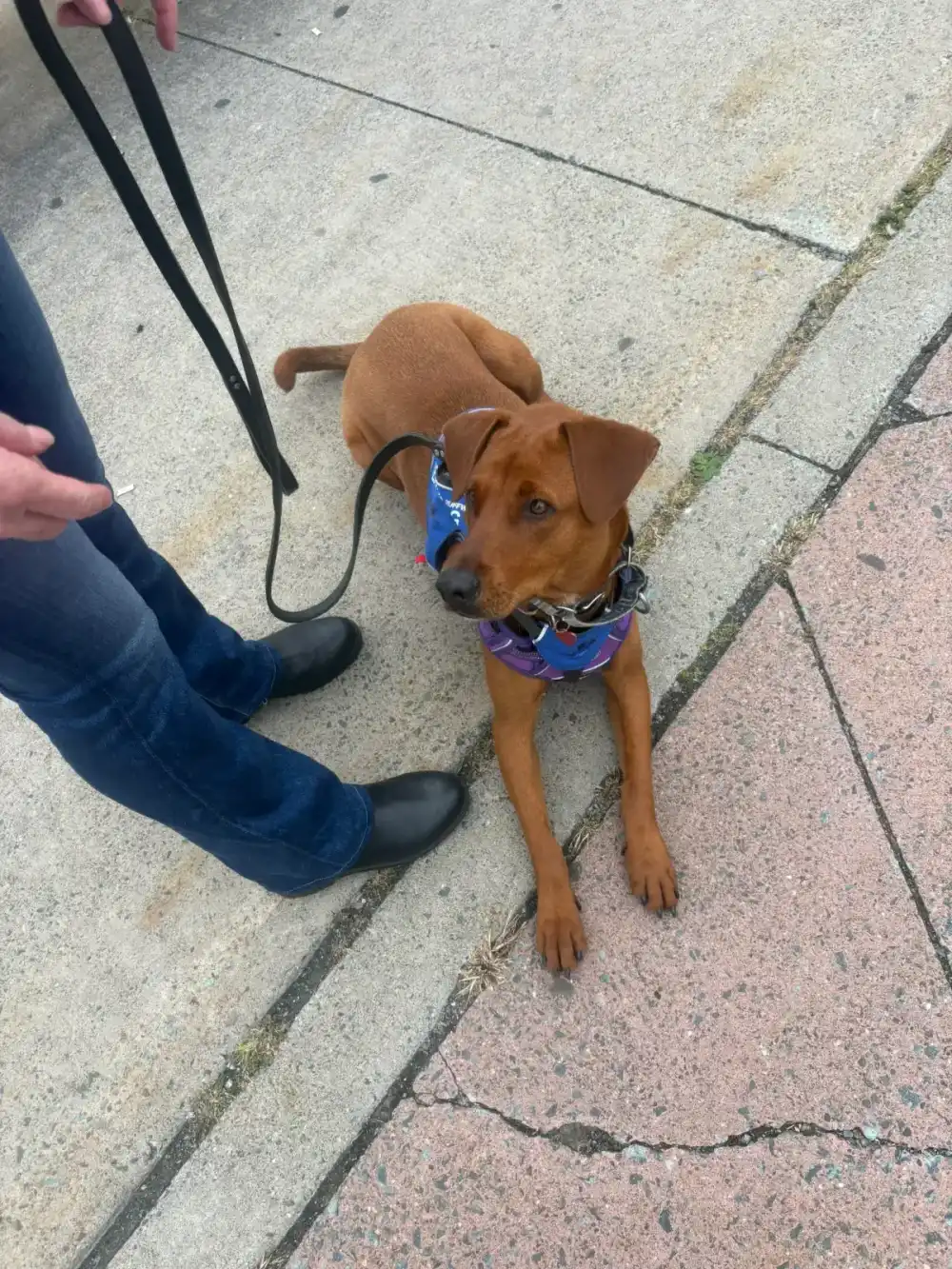
Settling is one of the most useful skills for a future service dog. Practise first in familiar places, then gradually introduce new settings.
Start with a short settle:
- Choose a quiet location.
- Place a mat or towel near you.
- Reward your puppy for standing, sitting or lying calmly.
- Offer occasional reinforcement while the puppy remains relaxed.
- Leave before your puppy becomes tired or frustrated.
Later, practise in a quiet lobby, outdoor seating area or other appropriate environment. Increase distractions gradually. A puppy who can settle at home may need additional support to settle somewhere unfamiliar.
What About Puppy Classes?
Well-managed puppy socialization classes can provide controlled opportunities to experience other puppies and people while you learn how to reinforce engagement, appropriate behaviour and confidence.
A good class should include more than free play. It should provide:
- Supervised interactions
- Breaks and opportunities to disengage
- Calm exercises near the handler
- Individual support
- Clear health and safety requirements
- Guidance on reading puppy body language
Pawsitively offers group puppy socialization classes a few times each year. They are not continuously enrolling, so please contact us directly if you would like to ask about upcoming opportunities.
You can also review our pet training services or read How to Choose the Best Puppy Socialization Classes in Nova Scotia & BC.
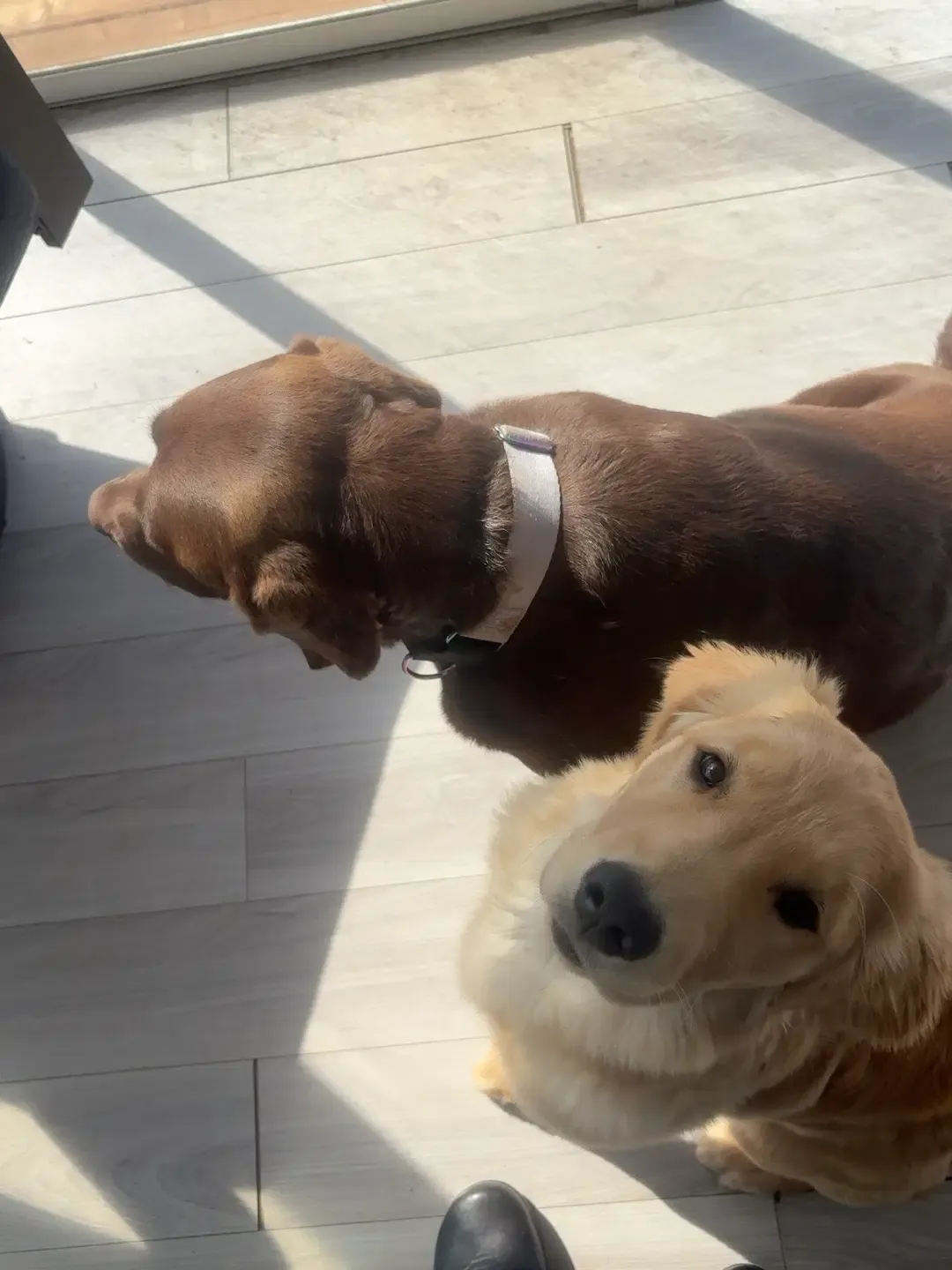
Supporting a Possible Future Service Dog
Socialization supports confidence, resilience and neutrality. It does not guarantee future suitability for service work.
As your puppy matures, suitability may be influenced by temperament, health, recovery from stress, environmental stability, physical development and the ability to learn and work safely. Our potential service dog suitability information can help you understand the broader process.
You may also wish to learn what age service dog training can start, whether service dogs can be any breed, or review our owner-trainer curriculum.
The most helpful approach is steady and protective. Let your puppy observe. Let your puppy recover. Reinforce calm engagement. Build skills gradually.
When you need individualized guidance, contact us. We can help you create a plan that respects your puppy’s welfare, your daily life and your long-term goals.
Melanie Burneau
Owner & Head Trainer
Pawsitively Service Dogs Inc.
Nova Scotia: melanie@pawsitivelyservicedogs.ca
British Columbia: jenn@pawsitivelyservicedogs.ca
General inquiries: info@pawsitivelyservicedogs.ca