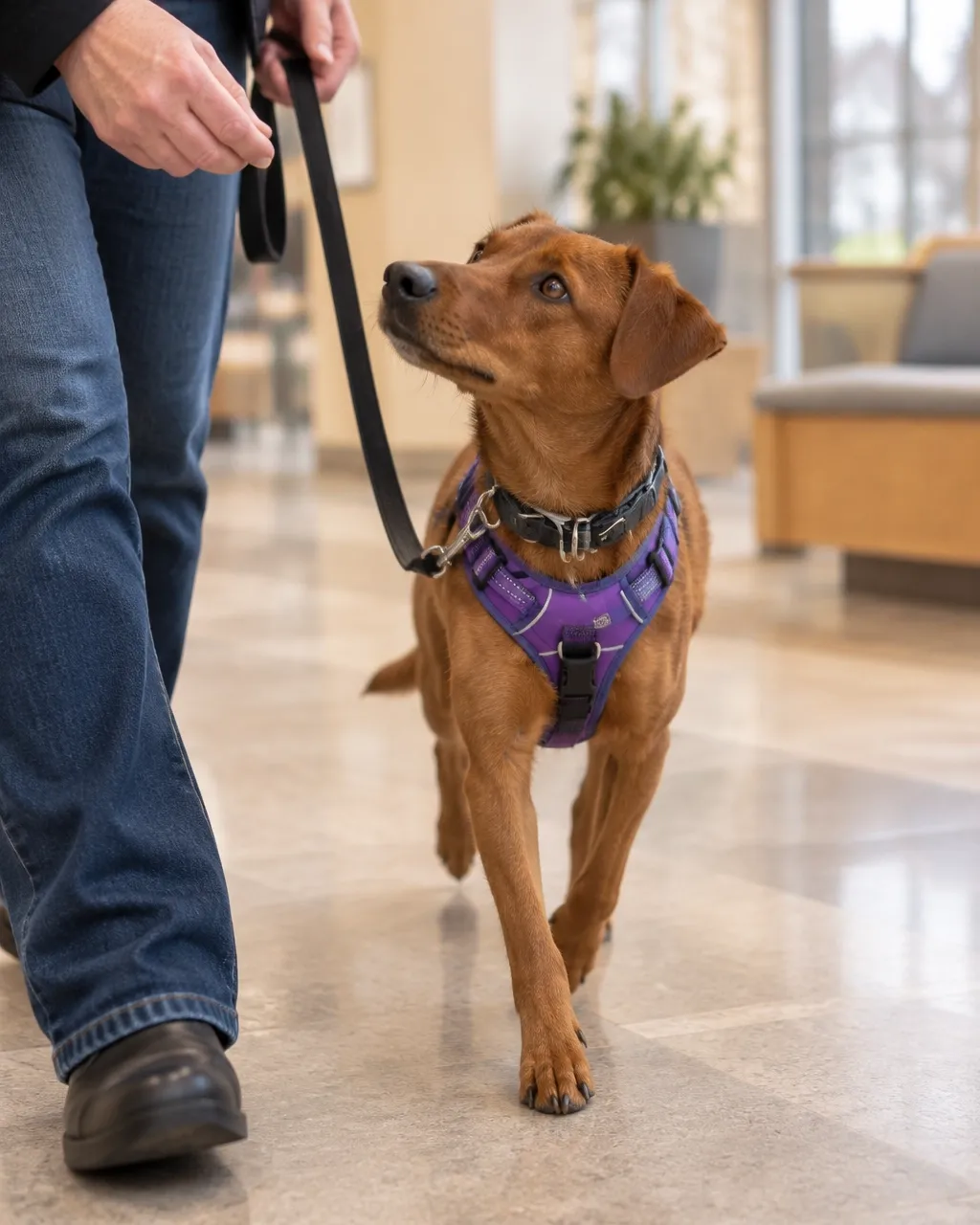
Yes. A service dog can come from many different breeds, breed combinations, and backgrounds.
There is no single universally correct service dog breed. Labrador Retrievers, Golden Retrievers, and Standard Poodles are commonly seen in service work for good reasons, but breed alone determines nothing. A dog from a traditionally successful breed may not be suitable. A mixed-breed dog or a less commonly seen breed may be an excellent candidate.
The most useful question is not, “What breed is this dog?”
It is:
“Does this individual dog have the temperament, health, skills, and lifestyle fit needed for the work?”
Why Individual Suitability Matters More Than a Breed Label
Breed can offer helpful information about tendencies, needs, and historical purpose. It cannot provide a guarantee.
Service dog work asks a dog to remain calm, responsive, and capable in a wide range of environments. The dog may need to work around people, other animals, traffic, unusual sounds, tight spaces, food, movement, and unexpected changes. It must also perform specific disability-mitigating tasks reliably while maintaining a healthy relationship with its handler.
We assess the whole dog.
Important considerations include:
- Temperament: Is the dog socially appropriate, emotionally steady, and comfortable accepting guidance?
- Environmental stability: Can the dog function around unfamiliar surfaces, sounds, people, places, and movement?
- Recovery from stress: After something startling or difficult happens, can the dog settle and return to useful work?
- Neutrality: Can the dog notice people, dogs, food, and distractions without needing to investigate or respond to everything?
- Trainability: Does the dog engage with the handler and learn through structured, ethical training?
- Health: Is the dog physically and behaviourally healthy enough for the expected work?
- Expected adult size: Will the dog’s size suit the tasks, transportation, workspaces, and daily routines involved?
- Grooming needs: Can the handler realistically maintain the dog’s coat, skin, nails, ears, and general care?
- Exercise requirements: Can the handler consistently meet the dog’s need for movement, enrichment, rest, and decompression?
- Genetic tendencies: Are there inherited traits that may affect environmental vigilance, prey drive, sensitivity, independence, or social behaviour?
- Task requirements: Does the dog have the physical ability and learning profile needed for the specific tasks?
- Lifestyle fit: Can the dog’s needs realistically fit the handler’s home, schedule, energy, resources, and support system?
That last point matters as much as the others.
A dog may be intelligent, healthy, and highly trainable, but still be a poor match if its exercise, grooming, social, or environmental needs cannot be met. Service dog work should support the handler’s life without compromising the dog’s welfare.
Why Labradors, Goldens, and Standard Poodles Are Common
Labrador Retrievers, Golden Retrievers, and Standard Poodles are frequently selected for service work because generations of breeding and working selection have made certain cooperative traits common within many lines.
These breeds are often valued for:
- A history of working closely with people.
- A willingness to retrieve, carry, or interact with objects.
- Strong responsiveness to handler guidance.
- Trainability across a broad range of skills.
- Social qualities that can support public access work.
- A size that suits many, although not all, service tasks.
- The ability to work for extended periods when their physical and emotional needs are respected.
This does not mean every Labrador, Golden Retriever, or Standard Poodle is suitable. Individual dogs within these breeds can show fear, reactivity, poor recovery, physical limitations, or other characteristics that make service work inappropriate.
Their popularity reflects population-level tendencies and historical selection. It does not create a shortcut.
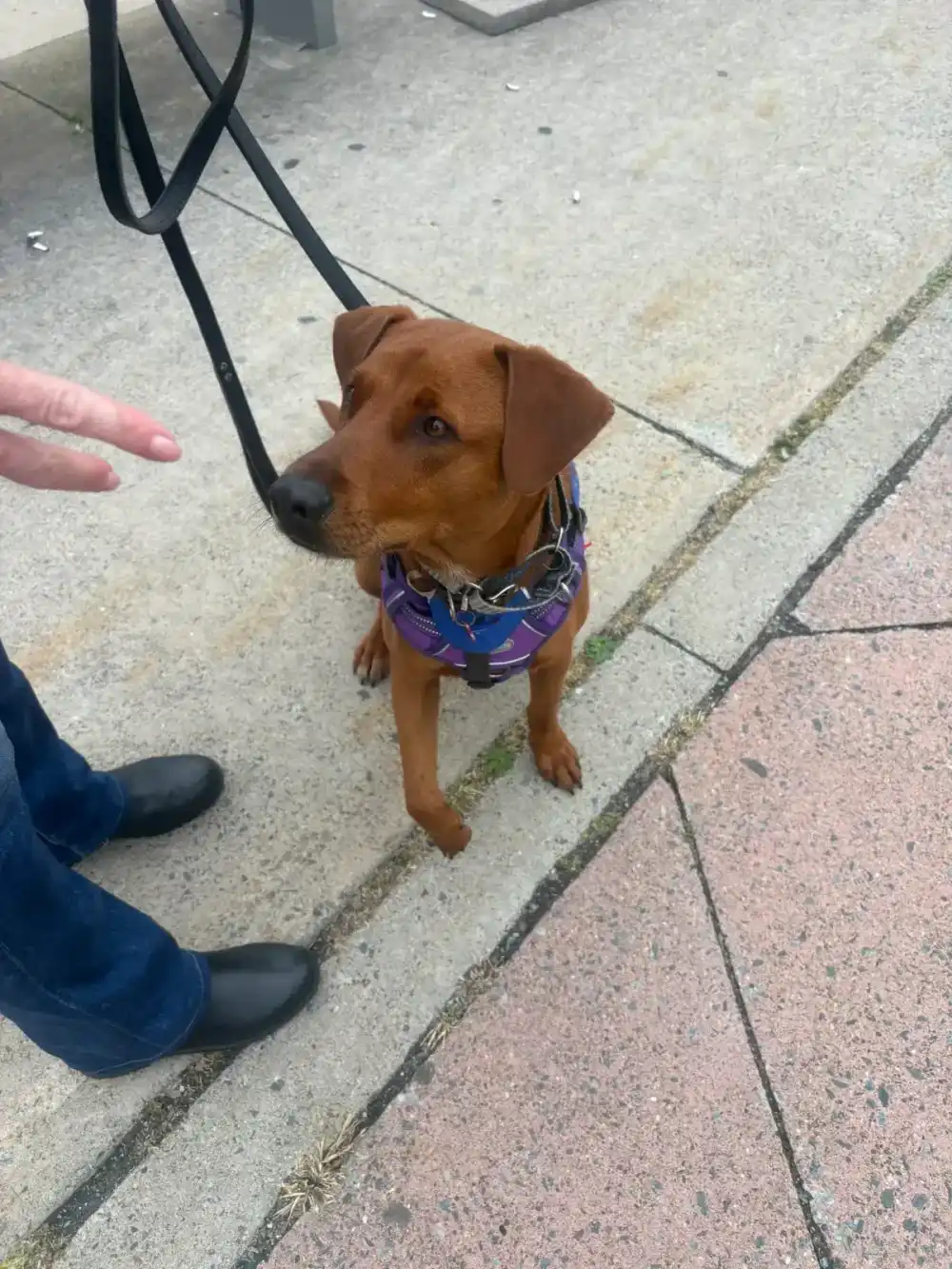
Other breeds and mixed-breed dogs can also succeed when the individual dog is a suitable match for the work. A mixed-breed dog is not automatically a compromise. It should be evaluated on its own qualities, just like a purebred dog.
Can Small Dogs Be Service Dogs?
Yes. A small dog may be fully capable of performing certain disability-mitigating tasks.
Size affects what a dog can physically do. It does not determine the dog’s value, intelligence, commitment, or ability to form a working partnership.
For example, a small dog may be able to:
- Alert to sounds.
- Retrieve lightweight objects.
- Provide medical response behaviours.
- Interrupt or redirect a behaviour.
- Locate a person or item.
- Provide tactile cues.
- Perform tasks in spaces where a larger dog may be difficult to manage.
A small dog would generally not be an appropriate choice for tasks that require substantial physical strength, such as pulling a wheelchair or providing physical bracing. Those tasks require careful consideration of the dog’s size, structure, conditioning, and veterinary health.
The right question is not whether a small dog is “enough.” The right question is whether the dog’s physical abilities match the tasks required.
Transportation, housing, workplace layout, and the handler’s daily routines may also influence whether a particular size is practical. These are matching considerations, not judgments about the dog.
What About Guardian Breeds?
Guardian breeds should not be dismissed automatically.
Dogs historically selected for guarding, protection, or environmental vigilance may present different training considerations from breeds developed primarily for cooperative retrieving or assistance work. Some individuals may notice changes in the environment quickly, show more independence, or be more cautious around unfamiliar people and situations.
These tendencies may affect public access training. They do not make a breed inherently dangerous or automatically unsuitable.
An individual guardian-type dog still needs to be evaluated fairly. We look at observable behaviour rather than relying on stereotypes. We consider:
- How the dog responds to unfamiliar people.
- Whether the dog can remain neutral in public.
- Whether the dog can accept handler direction during uncertainty.
- How quickly the dog recovers from environmental changes.
- Whether the dog shows protective or territorial responses.
- Whether the dog can work without constantly monitoring the surroundings.
- Whether the handler can meet the dog’s exercise, enrichment, and management needs.
Some guardian-breed dogs may be appropriate for particular service roles. Others may be happier and more successful in a different type of work or as companion dogs. The individual evaluation matters.
Breed Doesn’t Override Welfare
Even a breed commonly used in service work can produce an individual dog who is not suitable.
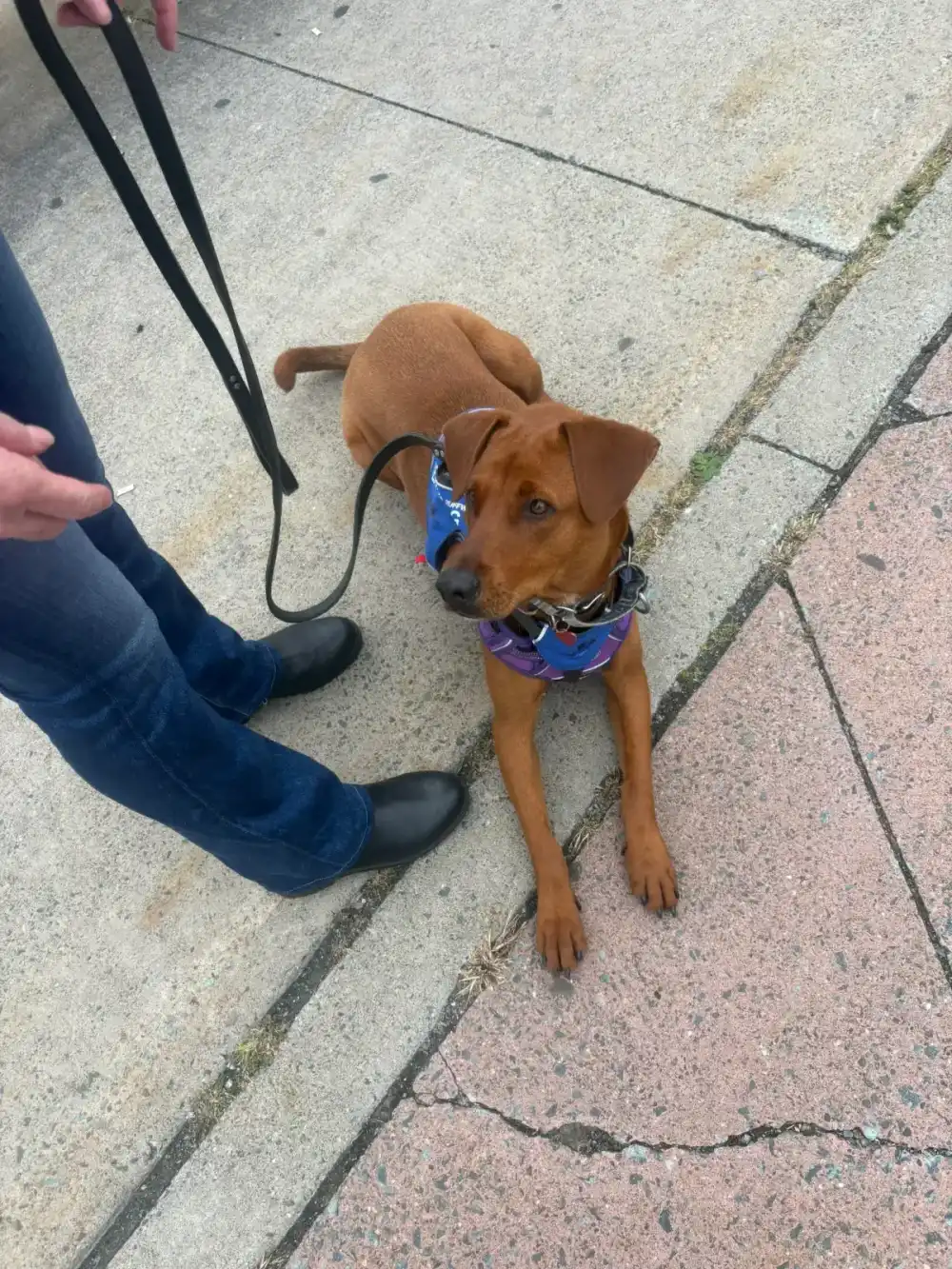
A Labrador may be uncomfortable in busy environments. A Golden Retriever may struggle with recovery from stress. A Standard Poodle may have needs that do not fit a particular handler’s lifestyle. A mixed-breed dog may have excellent neutrality, resilience, and handler focus. A guardian-breed dog may show the steadiness and responsiveness required for a specific role.
No breed label can replace observation.
A dog should not be pushed toward service work simply because the handler expected it to succeed. Training must remain conditional on the dog’s stability, health, readiness, and welfare. If the dog is showing ongoing stress, shutdown, fear, unsafe behaviour, or difficulty recovering, the plan may need to change.
Sometimes the responsible outcome is to adjust the tasks. Sometimes it is to pause training. Sometimes it is to consider a career change or a companion-dog path. This is not a failure. It is responsible decision-making.
You can learn more about the suitability process in our article on whether your dog may be suitable to become a service dog, and you can read about the possible outcomes when a candidate is not able to continue in What Happens When a Service Dog Candidate Washes Out?.
A Successful Breed Is Not a Guarantee
Choosing a puppy from a traditionally successful service-dog breed may improve the likelihood of finding relevant traits within that population. It does not guarantee that the puppy will mature into a suitable service dog.
Puppies change as they grow. Their adult temperament, health, environmental responses, and physical development become clearer over time. Early promise is encouraging, but it is not a final answer.
This is why responsible service dog training includes ongoing evaluation. A puppy or young dog should be supported through appropriate socialization, confidence-building, skill development, and gradual exposure. Socialization is not about taking a puppy everywhere as quickly as possible. It is about developing confidence, resilience, neutrality, and the ability to recover.
Our service dog programs are structured around this broader process. We consider the dog, the handler, the tasks, and the environments in which the team needs to work. We also continue to monitor suitability as training progresses.
How to Get an Answer About Your Dog
Online breed lists can offer general information. They cannot tell you whether your specific dog is suitable for service work.
A professional assessment should consider:
- Your dog’s history and current behaviour.
- Your disability-related goals.
- The tasks you need the dog to perform.
- Your daily routines and living environment.
- Your dog’s health and veterinary history.
- Public access expectations.
- Exercise, grooming, rest, and enrichment needs.
- The dog’s response to stress and unfamiliar situations.
- The practical fit between the dog and handler.
At Pawsitively Service Dogs Inc., our Potential Service Dog Assessment is $150 plus tax. The assessment is designed to help you make a clearer, more informed decision about a specific dog.
It is not a certification. It is not a guarantee that your dog will become a service dog. It is an opportunity to review the current picture honestly and identify the safest next step.
If you are considering a puppy or wondering whether your current dog may be able to do service work, you can contact us to learn more.
A Thoughtful Starting Point
Service dog suitability is individual.
Labradors, Golden Retrievers, and Standard Poodles are common because many have historically demonstrated cooperative working traits, trainability, consistency, and suitable size. Other breeds and mixed-breed dogs can also succeed. Small dogs may be highly capable for tasks that match their size. Guardian breeds deserve fair, individual evaluation rather than automatic exclusion.
Breed can provide context. It cannot make the decision.
The goal is a safe, confident, sustainable partnership that supports you while respecting the dog’s needs. A thoughtful assessment helps you begin with clarity, realistic expectations, and care.
Melanie Burneau
Owner & Head Trainer
Pawsitively Service Dogs Inc.
Nova Scotia: melanie@pawsitivelyservicedogs.ca
British Columbia: jenn@pawsitivelyservicedogs.ca
General inquiries: info@pawsitivelyservicedogs.ca